
 By loan instaplayzone
So, you’ve got big dreams, a fantastic university acceptance letter, and a mind buzzing with possibilities. That’s incredible! But then, the reality check hits: the cost. And that’s usually when the phrase “education loan interest rates in India” pops into your head, often accompanied by a tiny pang of anxiety. Trust me, you’re not alone. Thousands of students and their families grapple with this exact question every year. My goal today? To walk you through the labyrinth of education loan interest rates, not just tell you what they are, but show you how to understand them, how to compare them, and most importantly, how to make them work for you, not against you. Think of me as your friendly, slightly-obsessed guide in this financial jungle.
Let’s be honest, the banking world often feels like it speaks its own language. Jargon, fine print, and acronyms can make your head spin faster than a top. But when it comes to securing your future, knowing the ins and outs of youreducation loanis paramount. We’re going to peel back the layers, step by step, so you can approach your loan application with confidence and clarity. No more guesswork, just smart, informed decisions. Ready?
Demystifying Interest Rates | Fixed, Floating, and What They Mean for You

The first fork in the road when looking at education loan interest rates in India is almost always the choice between fixed and floating rates. This isn’t just a technical detail; it’s a decision that will impact your monthly repayment for years. Let me break it down simply.
Fixed Interest Rates | The Predictable Path
With fixed interest rates, your rate stays the same throughout the entire loan tenure. Period. The EMI (Equated Monthly Installment) you start with is the EMI you’ll generally end with. This offers immense predictability, which, for many, is a huge comfort. You know exactly what you’re committing to each month, making financial planning much easier.
I initially thought fixed rates were always the safer, no-brainer option. And for peace of mind, they often are. However, they typically start a little higher than floating rates. It’s like buying an insurance policy against future interest rate hikes. If rates go up in the market, you win because your rate is locked. But if rates go down, you might feel a pinch, knowing you’re paying more than others who opted for a floating rate.
Floating Interest Rates | Riding the Market Wave
Now, floating interest rates are a different beast. They fluctuate with market conditions, specifically linked to an external benchmark. In India, this is often the Repo Linked Lending Rate (RLLR) or a similar benchmark set by the Reserve Bank of India (RBI). When the RBI revises the repo rate, your loan’s interest rate usually follows suit. This means your EMI can go up or down over time.
The allure of floating rates is that they usually start lower than fixed rates, offering a more attractive initial repayment. If market rates fall significantly, your EMI could decrease, saving you money. But here’s the flip side: if rates climb, so does your EMI. It’s a bit like a seesaw. You gain flexibility but take on a bit more risk. It’s crucial to understand your risk appetite before making this choice. Many students opt for floating rates, hoping for a downward trend in the economy, but it’s a gamble, albeit a calculated one.
Beyond the Brochure | Hidden Factors Influencing Your EMI (and How to Spot Them)
When you’re comparing education loan interest rates in India, it’s not just the advertised percentage that matters. Oh no, there’s a whole ecosystem of factors that subtly (or not so subtly) influence your actual outgo. This is where many applicants miss critical details, leading to surprises later. Let’s unmask them.
The Margin Money Maze
Have you heard of margin money education loan? This is the percentage of the loan amount that the borrower (or co-borrower) has to pay from their own pocket. For loans below a certain amount (often around ₹4 lakhs), banks might finance 100%. But for higher amounts, especially for studying abroad, expect to contribute 5-15% of the total cost. This directly reduces the loan amount you need, which, in turn, impacts your total interest paid. It’s a hidden saving opportunity if you can manage it.
Processing Fees and Other Charges
Just like any financial product, education loans can come with processing fees, administrative charges, or even pre-payment penalties (though many banks have relaxed this for floating rate loans). While these might seem small compared to the overall loan, they add up. Always ask for a full list of all associated charges before you sign anything. A slightly higher interest rate from one bank might actually be cheaper if another charges hefty processing fees.
The Power of Your Credit Score (and Your Co-applicant’s)
Banks are increasingly looking at the creditworthiness of the applicant and, more importantly, the co-applicant. A strong CIBIL score can give you leverage to negotiate a better interest rate. This is particularly true for private banks. So, ensuring your co-applicant (usually a parent or guardian) has a healthy credit history can shave off precious basis points from your interest rate.
Understanding the Moratorium Period
Most education loans in India come with a moratorium period, which is typically the course duration plus six months to a year after course completion. During this time, you usually don’t have to start full EMI repayments. Some banks might require you to pay simple interest, while others offer a complete payment holiday. While this grace period is a huge relief, remember that interest does accrue during this time. Understanding how this accrued interest is capitalized (added to your principal) is vital for knowing your final repayment burden. The longer the moratorium, the more interest accumulates, often without you feeling it immediately.
To truly get a grip on your future EMIs, a good education loan EMI calculator is your best friend. Don’t rely solely on what the bank tells you; plug in different scenarios (with and without margin money, varying moratorium interests) to see the real picture. It’s a game-changer for budgeting.
Government Schemes & Smart Strategies | Lowering Your Education Loan Burden
Okay, so we’ve tackled the basics. Now, let’s talk about leveraging available resources and smart moves to genuinely reduce your interest burden. Because, let’s face it, every rupee saved is a rupee earned for your future.
Tapping into Government Schemes
India offers several government education loan schemes designed to make higher education more accessible. The most prominent is often the Central Scheme of Interest Subsidy (CSIS) for economically weaker sections (EWS). If you fall into this category, the government pays the interest during the moratorium period. This is a massive relief! Always inquire if you are eligible for any such schemes when talking to banks, especially public sector ones. It’s not just about getting the loan; it’s about getting the smartest loan.
The Indian banking system, guided by theReserve Bank of India (RBI), aims to support students. Familiarize yourself with these initiatives. They can significantly alter the overall cost of your education.
Collateral | The Game Changer for Interest Rates
The requirement for collateral for education loan often determines the interest rate you’re offered. Generally, for loans above a certain threshold (often ₹7.5 lakhs), banks require collateral – typically property, fixed deposits, or government securities. Securing your loan with collateral significantly reduces the bank’s risk, and they, in turn, reward you with lower interest rates. Without collateral, the rates are usually higher because the bank takes on more risk. So, if you have access to collateral, seriously consider using it.
The Power of Tax Benefits (Section 80E)
Here’s a fantastic saving grace that many overlook: the education loan interest tax benefit under Section 80E of the Income Tax Act. While you cannot claim deductions on the principal amount, you can deduct the entire interest paid on your education loan for up to 8 consecutive assessment years, starting from the year you begin repaying the interest. This is a huge benefit that effectively lowers your taxable income and, consequently, your overall tax liability. Always keep your loan repayment statements handy for this!
Choosing Your Lender Wisely | Public vs. Private Banks
When it comes to sourcing your education loan, you essentially have two main avenues: public sector banks and private banks. Each has its own set of characteristics, and understanding them is key to finding the best education loan providers India offers for your specific needs.
Public Sector Banks | The Traditional Choice
Think SBI, PNB, Bank of Baroda, etc. These banks are often the first port of call for students seeking loans. Why? Primarily because they often offer lower interest rates, more flexible repayment options, and are more aligned with government-backed schemes. They tend to have more standardized processes, which can sometimes feel slow, but they are generally very trustworthy and transparent. They are also more inclined to offer loans for studies in India and abroad with competitive education loan interest rates in India.
Private Banks & NBFCs | Speed and Flexibility
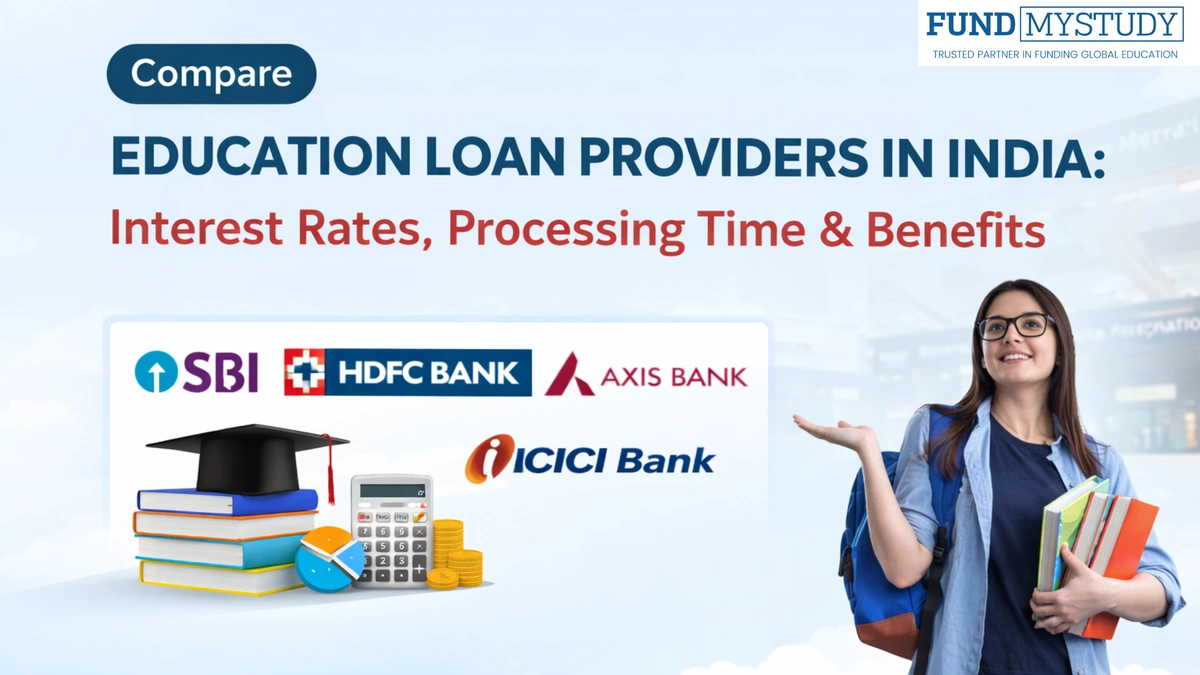
HDFC Bank, ICICI Bank, Axis Bank, and various Non-Banking Financial Companies (NBFCs) like Avanse or Prodigy Finance (for foreign studies) fall into this category. Their strengths lie in quicker processing times, often more tailored services, and sometimes a greater willingness to lend without traditional collateral for higher amounts, especially for premier institutions or specific courses. However, this convenience often comes at a price: typically higher interest rates compared to public sector banks. It’s a trade-off between speed/flexibility and cost.
When you’re comparing, don’t just look at the headline interest rate. Dig into their terms forpersonal loanand education loan options. Ask about the processing fees, the moratorium period details, the frequency of interest recalculation, and their customer service reviews. A slightly higher rate from a bank known for excellent service and transparency might be a better choice than a marginally lower rate from a bank notorious for hidden charges or bureaucratic nightmares during your loan repayment phase.
Ultimately, the best approach is to compare offers from at least 2-3 public sector banks and 1-2 private banks/NBFCs. Create a spreadsheet, list out all the terms, fees, and conditions, and then make an informed decision. This proactive comparison can save you lakhs over the loan tenure.
FAQs on Education Loan Interest Rates in India
What’s the typical interest rate range for education loans in India?
Typically, education loan interest rates in India can range from 8% to 15% per annum. Public sector banks generally offer rates between 8% and 10%, while private banks and NBFCs might charge 10% to 15% or even higher, depending on factors like collateral, university ranking, and the course.
Can I get a subsidy on my education loan interest?
Yes, under schemes like the Central Scheme of Interest Subsidy (CSIS) for economically weaker sections (EWS), the government subsidizes the interest during the moratorium period. Eligibility depends on your family’s annual income and other criteria, so it’s always worth checking with your bank.
How does the moratorium period affect my interest?
The moratorium period (course duration + 6-12 months post-course) is a payment holiday. While you don’t make full EMI payments, interest continues to accrue. This accumulated interest is often added to your principal amount, increasing your total repayable amount. Some banks may require you to pay simple interest during this period.
Is collateral always required for an education loan?
No, not always. For loans up to ₹7.5 lakhs, most banks in India do not require collateral. For loans above this amount, collateral (like property, fixed deposits) is generally required, especially by public sector banks. However, some private banks and NBFCs might offer unsecured loans for higher amounts based on the applicant’s profile and university.
How can I compare education loan interest rates in India effectively?
To compare effectively, look beyond just the interest rate. Consider the type (fixed vs. floating), processing fees, margin money, moratorium period terms, pre-payment penalties, and the bank’s reputation for service. Use online EMI calculator tools and create a comparison sheet to weigh all factors.
Are there any tax benefits on education loan interest?
Absolutely! Under Section 80E of the Income Tax Act, you can claim a deduction on the entire interest paid on your education loan. This deduction is available for up to 8 consecutive assessment years, starting from the year you begin paying the interest. This can significantly reduce your taxable income.
Navigating education loan interest rates in India might seem daunting at first, but with a bit of informed insight, it’s entirely manageable. Remember, this isn’t just about securing funds; it’s about making a financially sound decision that empowers your academic journey without burdening your future. By understanding the nuances of fixed vs. floating rates, recognizing hidden costs, leveraging government schemes, and choosing your lender wisely, you’re not just taking a loan – you’re making an investment in yourself, an investment that’s planned, protected, and poised for success. Go forth, future changemaker!