
 By loan instaplayzone
Ah, the great Indian dream of owning a home. It’s a universal aspiration, isn’t it? That feeling of having your own space, a sanctuary you’ve built brick by brick (or rather, EMI by EMI). But here’s the thing: between that dream and the reality lies a crucial gatekeeper – the housing loan eligibility calculator . For many, it feels like a mysterious black box. You feed it some numbers, and it spits out an answer: ‘eligible’ or ‘not eligible.’ But what if I told you it’s not just a simple calculation? What if understanding it deeply could be your secret weapon to securing that home loan faster, and on better terms?
Let’s be honest, the world of home loans can feel overwhelming. Interest rates, tenure, EMIs, credit scores – it’s enough to make anyone’s head spin. And that’s precisely why a calculator isn’t just a convenience; it’s a strategic tool. As someone who’s seen countless aspiring homeowners navigate this journey, I’ve realized that the true power isn’t in just using the calculator, but in truly understanding the mechanics behind your home loan eligibility . This isn’t just about punching numbers; it’s about empowering you with knowledge.
What Exactly Is a Housing Loan Eligibility Calculator, Anyway?
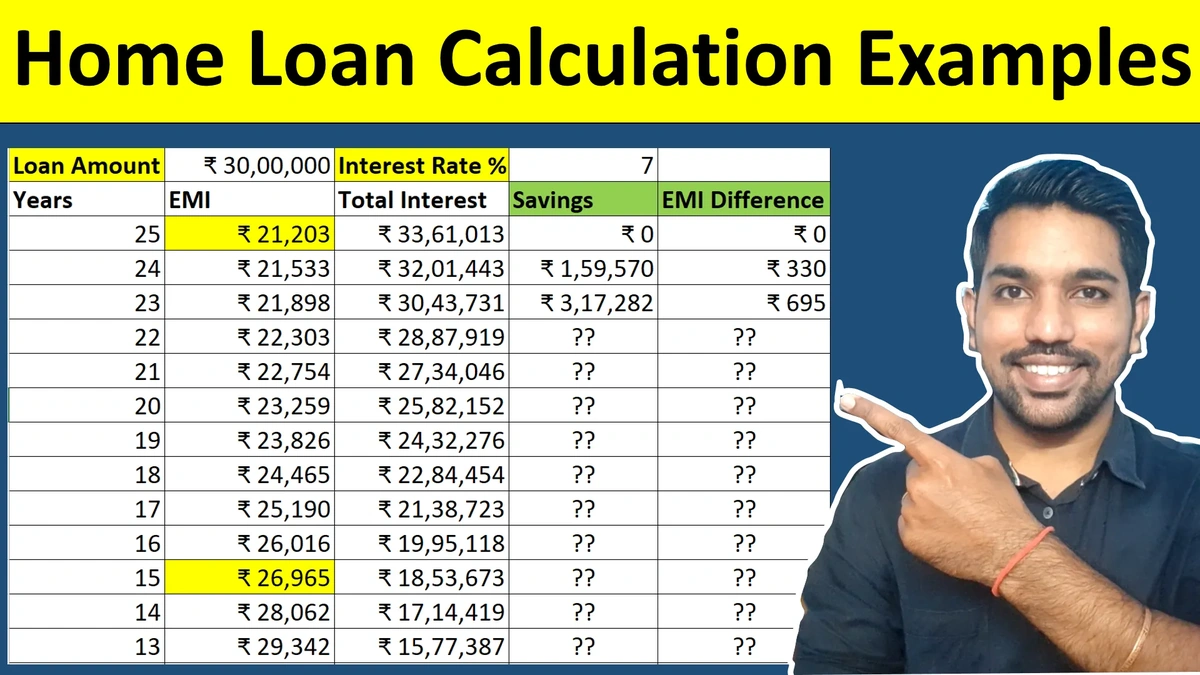
Think of the housing loan eligibility calculator as your financial GPS for homeownership. At its core, it’s an online tool provided by banks andhousing finance companiesthat gives you an estimate of the maximum loan amount you can borrow. It takes into account several critical factors to determine your repayment capacity. Many people just see it as a quick check, but what fascinates me is its ability to forecast your financial future in the context of a loan.
It’s designed to give you a preliminary idea, helping you gauge affordability before you even start property hunting seriously. This saves you immense time and potential heartbreak. I’ve often seen people fall in love with a property only to realize later they don’t qualify for the necessary loan amount. That’s a mistake you can easily avoid by leveraging this tool intelligently.
The calculation typically revolves around your income, age, existing liabilities, and the chosen loan tenure. It’s a dynamic tool, meaning a slight tweak in one variable can significantly alter your potential loan amount . Understanding this interplay is key, and it’s what differentiates a casual user from a strategic homebuyer.
The Nuts and Bolts | Unpacking Key Factors Affecting Your Home Loan Eligibility in India

Now, let’s pull back the curtain and look at the real drivers behind your housing loan eligibility calculator results. Each element plays a crucial role in painting your financial picture for the lender.
Income & Employment Stability | Your Financial Backbone
This is arguably the biggest factor. Banks look at your net monthly income from all stable sources – salary, business profits, rental income, etc. They want to ensure you have a consistent and sufficient income stream to comfortably manage your monthlyloanrepayments. Salaried individuals with stable jobs at reputable companies often have an edge, as their income is predictable. For self-employed individuals, lenders usually look for consistent income proof over the last 2-3 years, like IT returns and bank statements. The higher and more stable your income, the better your chances and the larger the loan amount you might qualify for. This is where your ability to generate consistent income really shines through, impacting your overall home loan eligibility India .
Age & Tenure | Time is Money (Literally!)
Your age, especially at the time of loan application, directly impacts the maximum loan tenure you can get. Most banks offer home loans up to 30 years, but this is usually capped at the borrower’s retirement age (often 60 or 65 years). A younger applicant generally qualifies for a longer tenure, which means lowerEMIpayments and, consequently, higher eligibility, assuming all other factors are constant. Conversely, an older applicant might have a shorter tenure, leading to higher EMIs for the same loan amount, which could reduce their eligibility. It’s a delicate balance; while a longer tenure means lower EMIs, it also means paying more interest over the loan’s life.
Credit Score & History | Your Financial Report Card
Your credit score (CIBIL score being the most prominent in India) is paramount. It’s a three-digit number that reflects your creditworthiness and repayment behavior. A score of 750 or above is generally considered excellent and significantly improves your chances of not just approval, but also securing favorable interest rates. Lenders use this score to assess the risk involved in lending to you. A poor credit history, marked by delayed payments or defaults on previous loans or credit cards, will raise a red flag and can severely impact your credit score impact on home loan approval, or even lead to rejection. It’s your financial reputation speaking volumes.
Existing Debts & Obligations | The Elephant in the Room
Banks meticulously evaluate your existing financial commitments. This includes ongoing EMIs for personal loans, car loans, education loans, and credit card outstanding balances. They calculate your debt-to-income ratio – the percentage of your monthly income that goes towards servicing existing debts. Typically, lenders prefer this ratio to be below 50-60%. If a significant portion of your income is already committed to other liabilities, your ability to manage a new home loan EMI will be perceived as lower, thus reducing your maximum eligible loan amount . It’s a common trap I see people fall into: taking on too much debt before applying for the big one.
Property Type & Location | Yes, Even Your Home Matters!
While the calculator primarily focuses on your financial standing, the property itself plays a role, especially in the final approval stage. Banks conduct their own valuation of the property to ensure it meets their criteria and to determine the Loan-to-Value (LTV) ratio (the percentage of the property’s market value that the bank will finance). The type of property (apartment, independent house, plot), its age, legal clearances, and even its location can influence the bank’s willingness to lend and the final eligible amount. Unapproved properties or those in dispute areas are immediate disqualifiers. This aspect is crucial for a smooth loan approval process .
Beyond the Calculation | Savvy Moves to Boost Your Housing Loan Eligibility
So, you’ve used the housing loan eligibility calculator and perhaps weren’t thrilled with the initial estimate. Don’t despair! There are proactive steps you can take to significantly improve your standing. This is where strategy meets financial planning .
Master Your Credit Score
This cannot be stressed enough. Regularly check your CIBIL score and report. Dispute any errors immediately. Make sure all your existing loan and credit card payments are made on time, every time. Reduce your credit utilization (don’t max out your credit cards). A strong credit score demonstrates responsibility and significantly boosts your trustworthiness in the eyes of lenders. It’s the simplest yet most powerful way to positively influence your loan eligibility check .
Consolidate or Reduce Existing Debts
Before applying for a home loan, try to pay off or at least reduce your smaller, high-interest debts like personal loans or credit card dues. This will lower your debt-to-income ratio , freeing up more of your monthly income for your home loan EMI and directly increasing your eligible loan amount . It’s about clearing your financial deck for the most important venture.
Consider a Co-Applicant (Carefully!)
If your individual income or credit score isn’t strong enough, applying with a co-applicant (spouse, parent, or even adult child, depending on bank norms) can dramatically increase your eligibility. The co-applicant’s income and creditworthiness are also considered, effectively boosting the combined repayment capacity. However, remember that a co-applicant shares equal responsibility for the loan, so choose wisely. This is a common strategy in India for increasing the potential housing loan eligibility .
Increase Your Down Payment
While not directly an eligibility factor, making a larger down payment reduces the amount you need to borrow, thus making it easier to qualify for the remaining loan. A higher down payment also signals financial prudence to the bank, sometimes leading to better loan terms. It essentially lowers the lender’s risk.
Explore Different Lenders & Schemes
Don’t just stick to one bank! Different banks andhousing finance companieshave slightly varying home loan eligibility criteria and calculation methodologies. What might be a hurdle at one institution could be manageable at another. Always compare interest rates, processing fees, and eligibility norms across multiple lenders. Some might have special schemes for certain professions or government employees, which could work in your favor.
Common Pitfalls Indian Homebuyers Face (And How to Dodge Them!)
From my experience, several common mistakes trip up aspiring homeowners:
- Ignoring the Credit Score: Many only check their credit score when they need a loan. Start monitoring it months, even a year, in advance.
- Underestimating Hidden Costs: Beyond the property price, there are registration fees, stamp duty, brokerage, interior work, etc. Factor these into your overall financial planning for home loan.
- Applying to Multiple Lenders Simultaneously: While comparing is good, submitting full applications to too many banks in a short period can lead to multiple ‘hard inquiries’ on your credit report, which can slightly ding your score. Do your initial checks with eligibility calculators, then apply to 2-3 most favorable options.
- Not Reading the Fine Print: Terms and conditions, pre-payment penalties, processing fees – these can significantly impact your loan’s overall cost. Always clarify everything.
- Lying on the Application: This is a big no-no. Banks have robust verification processes. Any discrepancy will lead to immediate rejection and could blacklist you from future loans. Honesty is always the best policy in the loan application process.
Your Burning Questions About Home Loan Eligibility Answered
How accurate are these online housing loan eligibility calculators?
Online housing loan eligibility calculators provide a good estimate based on the information you input. However, they are generally indicative. The final eligible loan amount will depend on the bank’s detailed verification of your documents, credit history, and internal policies. Think of it as a strong starting point, not a final offer.
What documents will I need after I check my eligibility?
Once you have a good idea of your eligibility, you’ll need a range of documents required for home loan processing. This typically includes identity proof (PAN, Aadhaar), address proof, income proof (salary slips, bank statements, IT returns for last 2-3 years), and property documents (sale agreement, title deeds, NOC from builder). Always have these ready to expedite the loan approval process .
Can a low credit score completely ruin my chances?
A low credit score (typically below 700-750) can make it challenging, but it’s not always a complete deal-breaker. Some lenders might still offer a loan but at a higher interest rate, or they might ask for a higher down payment or a strong co-applicant. It’s best to work on improving your score before applying, if possible.
Is it better to apply with a co-applicant even if I’m eligible alone?
It depends. If your individual eligibility is already sufficient for your dream home, a co-applicant might not be strictly necessary. However, applying with a co-applicant can sometimes lead to a higher loan amount or even slightly better terms if their financial profile is strong. It also offers tax benefits for both applicants if certain conditions are met. Always weigh the pros and cons.
How often should I check my credit score when planning for a home loan?
It’s advisable to check your credit score at least once every 3-6 months in the year leading up to your home loan application. This allows you to monitor its health, identify any discrepancies, and take corrective actions to ensure it’s in top shape when you finally apply.
What’s the typical loan approval process like after eligibility?
After checking your initial eligibility and submitting your application, the loan approval process involves several steps: document verification, credit assessment, property valuation, legal checks on the property, and finally, sanctioning the loan. It can take anywhere from a few weeks to a couple of months, depending on the bank and the complexity of your case.
So, there you have it. The housing loan eligibility calculator is far more than just a quick online tool. It’s a compass, a planner, and, when understood properly, a powerful ally in your journey towards homeownership. Don’t just punch in numbers; decode the story they tell. Plan strategically, improve your financial standing, and confidently step towards unlocking the doors to your dream home. Happy house hunting, and even happier home loan qualifying!